Maybe you'll print this out and put it up somewhere as a reminder, or even share with the parent of a child who seems to experience more anxiety.
Enjoy!
Emily Marsh, Director of Clinical Intervention Services
Please scroll down to read our Unconditional Education blog posts.
You can click the button below to learn more about our Unconditional Education and School Based Services!
This week I'm sharing a short article about ways to support an anxious student. I'm often in conversation with our clinical team about how careful we need to be not to inadvertently reinforce anxious students' fears. Well-meaning school teams often end up giving anxious students accommodations that don't also help them challenge or face-distorted anxious or fear-based beliefs. Accommodations such as a shorter day schedule, time alone, and breaks when the feelings show up could be sending messages to the child that the world is an unmanageable place, and they can't handle it so we'll find ways that they can escape. Ideally, we will work with these students to accommodate just long enough to build the strength they need to lean into their anxieties and disconfirm their worries - worries that are out of proportion and/or debilitating them in their life. Okay, so how DO we support an anxious kid in the moment? What could we say or recommend that wouldn't be simply rescuing them from their feelings? It's not helpful to say "buck up kid, deal with it!" But it's equally not helpful, it turns out, to say "I'll save you!" This article offers some simple phrases that we can use with anxious children - it's written for parents, but I think useful for all of us. Maybe you'll print this out and put it up somewhere as a reminder, or even share with the parent of a child who seems to experience more anxiety. Enjoy! Blog post written by: Emily Marsh, Director of Clinical Intervention Services
0 Comments
That being said, anyone here will also likely tell you that they have extremely important game plans in place, and that the adaptable, flexible, course-correction aspects of our work tend to be both the inspiration for our best work, and what chips away at our sense of direction. When, we ask ourselves, do we push back against the latest request to abandon a project for a more pressing one, and when do we adjust and accommodate, change direction, join the new course of action? All-In staff community, don’t despair! In the words of my celebrity fantasy husband David Bowie (may he rest in peace), “You’re not alone!” This is part of the good work you all do--it’s why we hire thoughtful, creative, flexible and energetic people who understand that providing unconditional care on a systems level can feel like a slow change process a lot of the time. I look around at our teams in schools and I am blown away by the high-quality, creative work being implemented, by the thoughtful problem solving our teams engage in, and the effort each person makes to identify and practice a disconfirming stance with our kiddos. It’s something to celebrate. This month I’d like to share a story that demonstrates creativity and flexibility, from one of our Clinical Intervention Specialists at Starr King in San Francisco. Here, Dana Wolfenbarger, like other CISs, must navigate the very grey area of delivering school consequences while supporting her client emotionally. The description that follows captures how Dana felt inspired by her client, and how she was able to hold the school priority of a consequence in mind, while still building and holding connection and humanity at the heart of her intervention. Can you imagine how this child felt -- working to heal a relationship and share a part of himself while acknowledging his own accountability to school rules and expectations? “Recently, in the middle of the day, I got a call on the walkie talkie from a school administrator saying that one of my clients (3rd grade) was escalated and needed support. When I arrived, the administrator asked me to take over and said that my client had to complete a written statement/apology explaining his poor behavior to his mother before he could return to class. My client refused. Once we were alone, I engaged my client in an exploratory discussion about what occurred and validated his feelings. I acknowledged how much he cares about his mother and how difficult it can be to communicate his mistakes for fear of letting her down. I reminded my client about how important music has been in his life and wondered aloud if music could help him find the words he wanted to say. He decided to write his mother a song taking inspiration from Tupac Shakur and Justin Bieber. He worked diligently on the song, taking responsibility for his behavior and repeating the hook “Is it too late to say I’m sorry?” He was proud of his work and presented the song to the school administrator. In this way, we were able to build upon his strengths and find an outlet that worked for him. The song was pretty incredible too.” I encourage you to celebrate the ways your flexibility and creativity are transforming interventions with the students. I encourage you to celebrate one another as well. Please keep sharing these stories with me and others on your team. We love hearing the varied ways you are reaching the students and communities. You are the heart of the work. Warmly, Emily Blog post written by: Emily Marsh, Director of Clinical Interventions All of us in the Unconditional Education world find ourselves challenged at one point or another by a child who just seems to "forget what she knows" in moments of escalation. Sometimes the escalation itself may not even be evident--a child who was once thoughtful and seemed to really internalize the concept of caring for a friend lashes out during a group lesson, or bullies a peer during a seemingly benign moment waiting in line. What is the problem??" we might ask - rhetorically really - as we stifle (or blurt out) the words "you know better than that!" We might be thinking "we've gone over this and over how to be a kind person, is this kid a monster??" Parents wonder these things too -- it's challenging to remember that moral development is not as linear as it feels once we're grown. As adults, we have learned and practiced the art of impulse control, of asking for help, of taking a moment before reacting. Typically we have quicker access to a higher moral road. The children we work with are at varying stages of moral development and it may be helpful to reflect on what that actually means, what that can look like. And this applies to all kids, regardless of whether there's a trauma history or a challenging internal working model. Let's normalize the bumpy road of moral development! Recently, some of our clinical supervision groups read an article published in in the Psychotherapy Networker that discusses the realities of childhood moral development. If you’re interested in reading the article, ask yourself as you read: How might you respond to a child who is struggling to apologize, given the information in this article? Are there ways we could reduce shaming children for their moral errors or natural missteps? Blog post written by: Emily Marsh, Director of Clinical Interventions Looking for resources on working with kiddos with a specific diagnosis? Starting a group and wondering what curriculum to use? Well, you’re in luck - the clinical strand has started its very own clinical library, located in Classroom 2 at Rock! Here’s what you need to do:
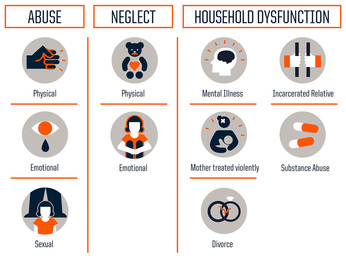
REMINDER: All In! has developed its own social skills manual based on the interventions that our amazing clinicians have already been using in their group work. The manual allows you to customize your own curriculum based on the age and needs of your students. There is a copy of the social skills manual in the library for you to review and check-out! Blog post written by: Robyn Ganeles, Assistant Director of Clinical Intervention Services “A traumatic event can seriously interrupt the school routine and the processes of teaching and learning. There are usually high levels of emotional upset, potential for disruptive behavior, or loss of student attendance unless efforts are made to reach out to students and staff with additional information and services. Students traumatized by exposure to violence have been shown to have lower grade point averages, more negative remarks in their cumulative records, and more reported absences from school than other students. They may have increased difficulties concentrating and learning at school and may engage in unusually reckless or aggressive behavior.” -National Child Traumatic Stress Network Seneca is proud to collaborate with the Trauma Center at the Justice Resource Institute on an exciting research project focused on improving the quality of care for youth who have experienced interpersonal trauma. The Developmental Trauma Disorder (DTD) field trial study aims to expand trauma-related services for children by developing a diagnostic picture that more accurately captures the cluster of symptoms that we see in children who have experienced complex and chronic trauma. Youth who struggle with multiple, recurring traumatic exposures comprise the largest group of clients served by our agency. In working directly with these children, Seneca has learned that trauma can often present as depression, anxiety, truancy, behavioral disorders, social skill deficits, learning disorders, drug abuse, hyperactivity, or behavioral regression. Yet at this time, no diagnosis exists that appropriately reflects the range of social, emotional, cognitive, and behavioral symptoms for children who have experienced complex trauma. As a result, children affected by trauma are often misdiagnosed which leads to ineffective and, in some cases, harmful treatments. The DTD diagnosis will provide practitioners and clinicians with a framework to understand and treat underlying causes rather than emphasizing problem elimination and behavioral control without considering the function of the behavior. The All In! Partnership Project’s commitment to unconditional education includes advocating for a greater understanding of the role that trauma plays in the lives of our students and families. The All In! clinical team works closely with schools to establish a trauma-informed school culture - one that recognizes the prevalence of trauma in our communities, understands the connection between trauma and a child’s presentation, addresses potential triggers in the environment that can activate a child who has experienced trauma, and responds by acknowledging that the behaviors represent a trauma-based survival strategy. All In! views the collaboration with The Justice Resource Institute as an opportunity to further the mission of educating communities about the impact of trauma on children and implementing best practices regarding care and treatment. We would like to recognize Kate Kenealy and Jessica Welsh, members of our clinical team who are volunteering their time to gather data for the DTD field trial study. We are still looking for study participants!
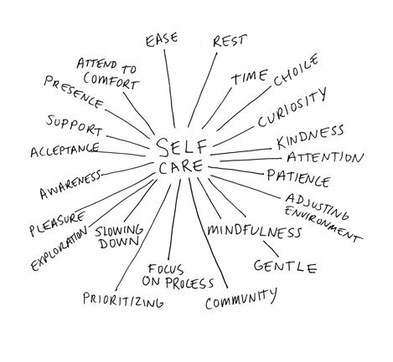
If you are working with families that may be interested, or if YOU and your child want to participate, please contact: Robyn Ganeles, Project Coordinator (510) 648-4891 or [email protected] Please click the images below for additional resources: Blog post written by: Robyn Ganeles, Assistant Director of Clinical Intervention Services “My mission in life is not merely to survive, but to thrive; and to do so with some passion, some compassion, some humor, and some style.” - Maya Angelou One of the leading Clinical Strand goals this year is to support our programs in increasing trauma-informed education practices. We do this through consultation with teachers, administrators, front office staff. We might discuss specific students’ internal working models. Or raise awareness of the impact of trauma through conversations, suggestions, staff trainings and student groups. We bring curiosity back where it’s been stifled; we normalize, validate and empathize. We think carefully about the function of a student’s behavior and share our hypotheses that they are doing the very best that they can right now; we attempt to draw empathy and compassion back where it may have been lost after several frustrating interactions with a struggling student. We hold hope, and joy, and love. The truth is that we are all doing this work, and it comes at a price. We are human, and the stories we hear leave an imprint on us as well. This can be accumulative, and result in something called Vicarious Trauma, or Secondary Stress. Today’s blog post will focus on how we can recognize and mitigate the impact of secondary trauma. This is part of high quality trauma work! We must help the helpers, and guess what: you’re the helpers! Signs of Vicarious/Secondary trauma include: feeling irreplaceable, powerless, anxious or impatient. Experiencing headaches, sleep disturbances, hypervigilance. Missing work, isolating from friends, difficulty concentrating, loss of hope. Listen to your colleagues or loved ones if they notice changes in your demeanor; it can be hard to recognize this in ourselves. So what can you do if you notice signs of stress that are impacting your ability to attend to your work of caring for others? Self care is a key piece of the puzzle here, and your supervisors can help with this too. We are always looking for ways to create and improve a trauma-informed system of care, and need you to share what works for you so we can continue to develop our innovative practices in a way that is sustainable for everyone involved. The importance of practicing self care -- right now! We can't always wait for that vacation time in 4 months, or the upcoming honeymoon to Aruba, or even the end of the day to catch a breath, take a step back, assess and reassess your difficult or triggered feelings. Self care may need to be conjured or practiced in the Very Moment. The moment you are aware of an imbalance in your best self. An important choice rests on your shoulders. What can be a brief practice of self-care that can shift the balance and reduce anxiety, stress and burnout or even subvert vicarious trauma? Consider incorporating one or more of these practices -- or re-incorporating if they fell off your radar. Time to reboot?

It is my honor to take a moment of your time today to appreciate all that you bring to this work, and to encourage you to notice if you or a colleague may need some extra support and encouragement. Let’s normalize the impact of trauma on all of us so that we can practice ways of staying connected and whole and balanced together. Obviously we believe in the power of our work to transform lives and heal the hurt--your life is just as important, what can you do today to honor you? Blog post written by: Emily Marsh, Director of Clinical Intervention Services |
Authors:School Program Partnerships We're Hiring!Interested in joining our School Program Partnerships' Team? Check out our open positions below!
Categories:
All
Archives
October 2025
|